 TradaZen
What a good trading simulator should reproduce
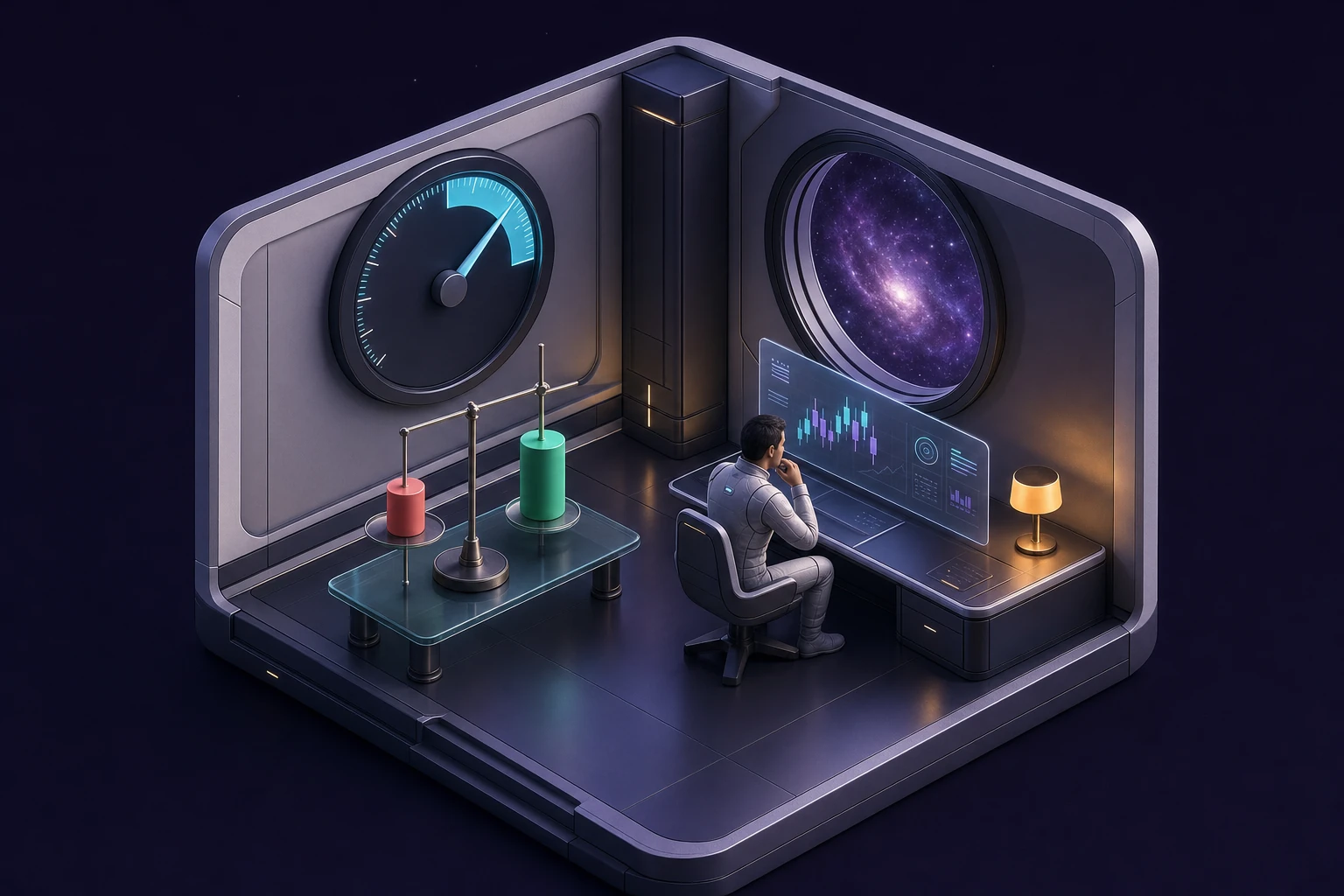
Many simulators rely on made-up or smoothed data. For practice to be useful, three things matter.
Real market moves. A real chart, taken at a real past date, has the hesitations, the bursts and the false leads of a real market. A randomly generated chart doesn't build the same reflexes.
A decision followed by a visible consequence. Entering, then watching the chart play out until the exit, is what makes the learning stick. A vocabulary quiz doesn't have the same effect.
A balance that keeps track of your decisions. An account that resets to zero after every mistake doesn't push you toward the same rigor as a balance that grows and shrinks with your reads.
How the TradaZen simulator works
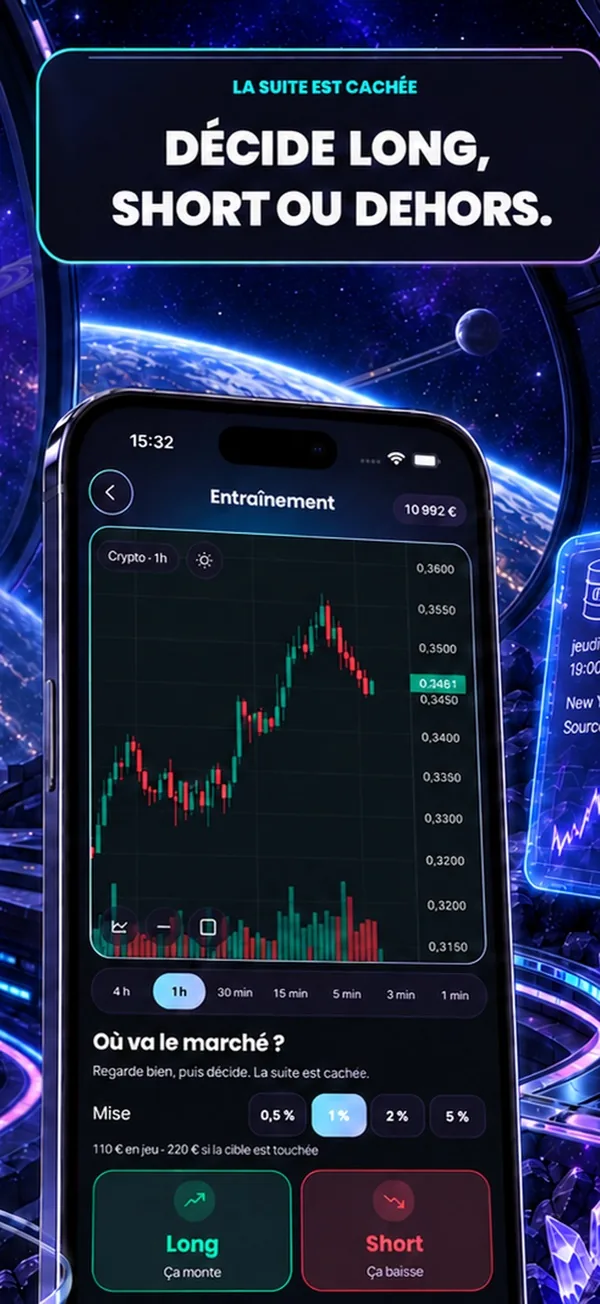
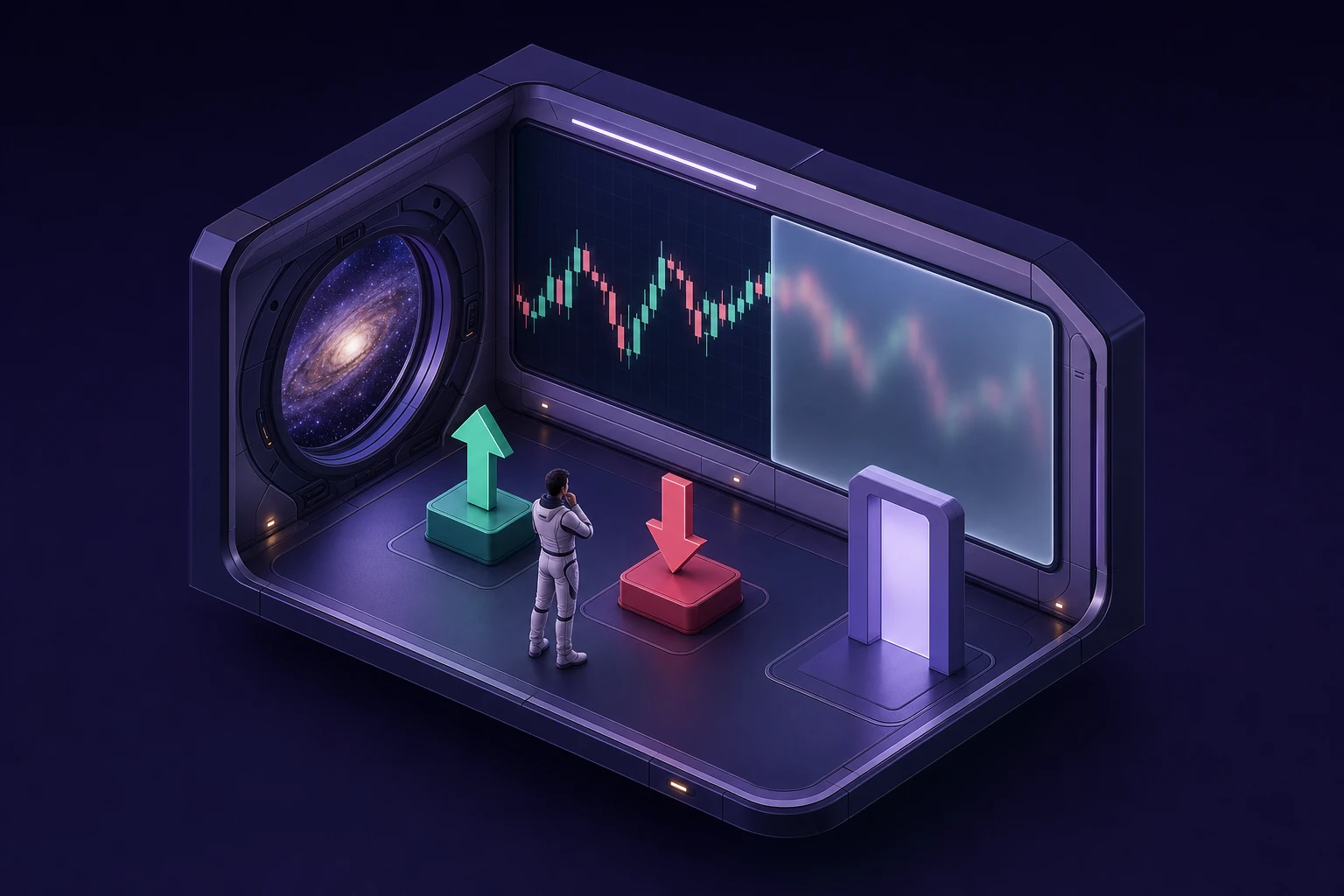
- You look at a real chart. Crypto, forex, indices, gold and commodities, futures or stocks, on a timeframe from 4 hours to 1 minute. What came next is hidden.
- You decide. Long, Short, or you stay out. The stop and the target are set for you: you see the risk before you confirm, and you choose your stake.
- The market answers. Candles appear one by one until the stop or the target is hit. At the end, you see the real day, the real time and the source of the scenario.
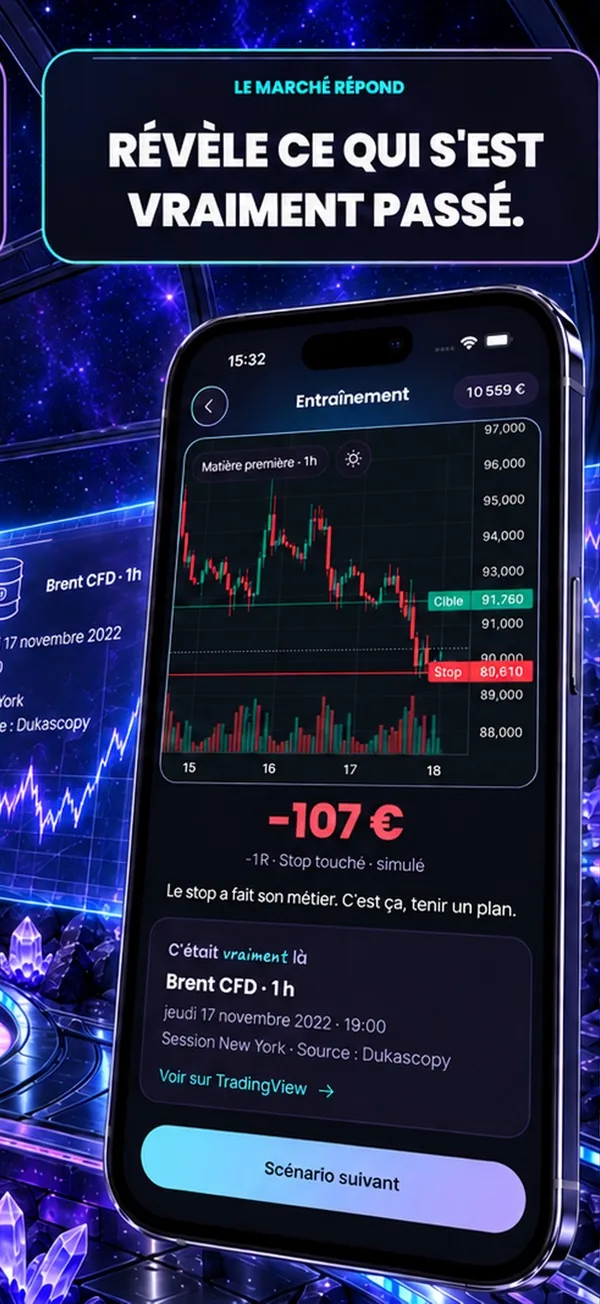
Your result is read in R, meaning in multiples of the risk you took: +2 R means you gained twice what you risked. It's the right unit for judging a read, because it doesn't depend on the size of the account.
A trading game to come back to every day
Practicing once changes nothing. What counts is consistency. So TradaZen borrows what keeps people coming back to the best games:
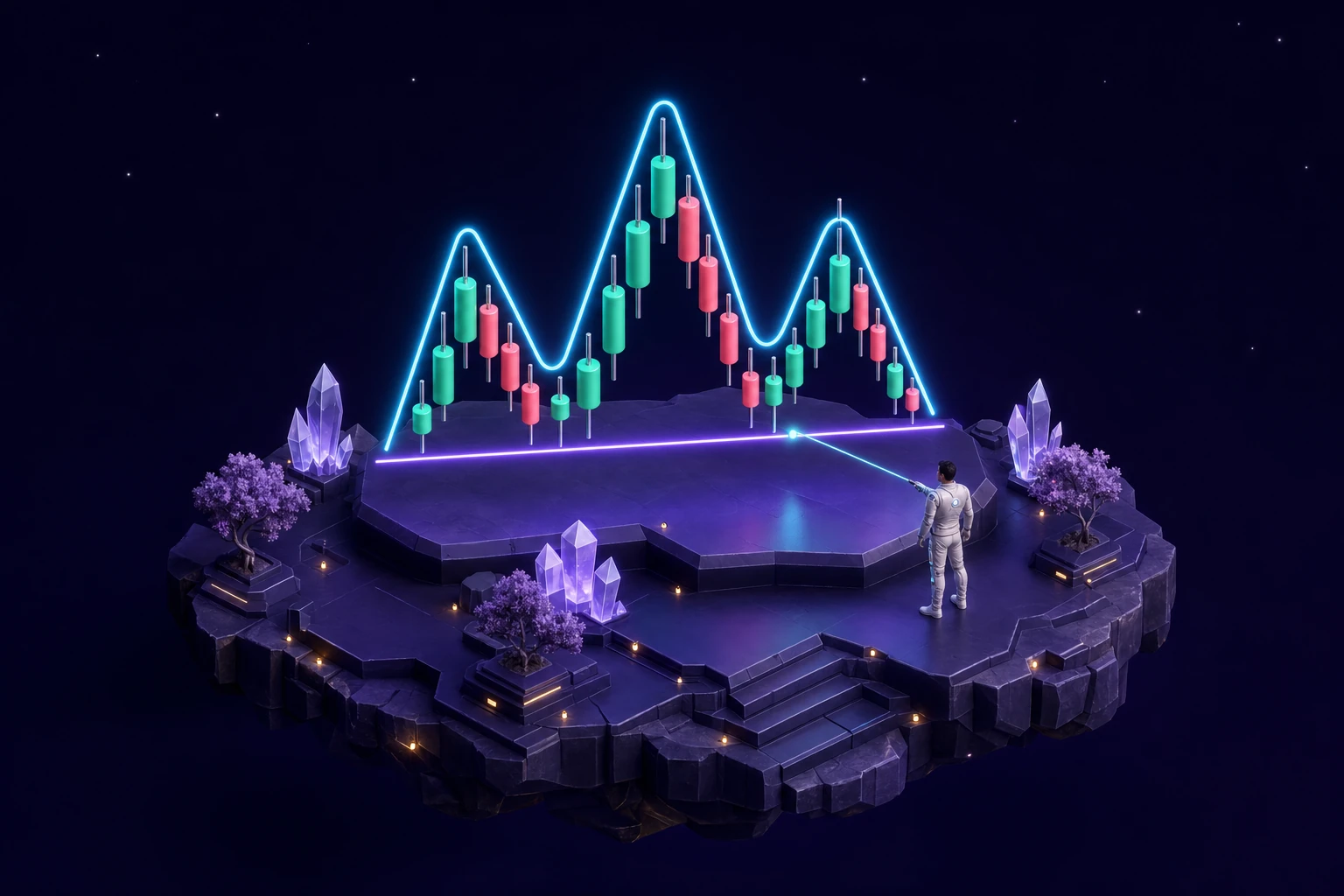
- a path of lessons, from candles to decisions, where Nova, the app's astronaut, explains charts to you with zooms and annotations;
- ranked duels: ten rounds, fifteen seconds per choice, the same scenarios for you and your opponent, and the total R decides;
- a rank from Iron to Diamond, with your stats: accuracy, mean R, streaks, results by market.

Simulator or demo account: which should you choose?
Both let you trade without real money, but they serve different purposes.
| Simulator on past scenarios | Broker demo account | |
|---|---|---|
| Data | Real charts that already happened | Live market |
| Pace | One scenario in a few minutes | The market's real time |
| What you work on | Reading and deciding, repeated | The platform and order execution |
| Measure | Accuracy and result in R over dozens of scenarios | A balance, over time |
| Getting started | An app to install | An account with a broker |
A simulator is for multiplying decisions: in one evening, you read more situations than in weeks of live market. A demo account is for learning a platform before putting money into it. One doesn't rule out the other.
What a simulator can't teach you
A simulator trains you to read a chart and decide under uncertainty. It doesn't reproduce everything. The emotion of a real loss, fees, order execution delays and the pressure of an account that puts your own money on the line remain different, even with the same chart in front of you.
That's why tilt in trading, the loss of control after a streak of losses, shows up more strongly with real money. A good read on a past chart says nothing about a future result.
Where to start if you're a complete beginner
Start by understanding what a candle represents: an open, a close, a high and a low over a period. Then pick a single market at first rather than jumping from one to another: consistency in what you observe helps you progress faster than variety.
Also write down what drove each decision, not just its result. A winning entry taken for no clear reason teaches you no more than a losing entry taken for a good reason. That's exactly what the trading journal is for.
Frequently asked questions
What is the best trading simulator?
The one that matches what you want to work on. To practice reading a chart and deciding, look for real data, a decision followed by its consequence, and a measure in R over time. To learn a specific platform, that platform's demo account is still the most direct route.
Is trading a game of chance?
On a single trade, chance weighs heavily: sound reasoning can lose and poor reasoning can win. That's why a method is judged over dozens of decisions, not just one. A simulator lets you build up those decisions without risking any money.
Can trading bring in 1,000 dollars a day?
Nothing allows anyone to promise that, and the numbers call for caution. In 2014, the Autorité des marchés financiers (AMF), the French market regulator, found that more than 89% of retail traders trading CFDs and forex were losing over four years. TradaZen promises no gains: it's training with a simulated balance.
Does TradaZen use real money?
No. The balance is simulated, in your currency, and the app places no orders. TradaZen is not a broker and gives no investment advice.
Is TradaZen free?
The download is free. Training requires a TradaZen Pro subscription, yearly, monthly or weekly. Eligible new subscribers can get 7 days free on the yearly subscription.
 Mehdi Azizi created TradaZen and published it on the App Store through the Devoria studio. The app's scenarios are real past charts, never made-up data.
TradaZen is a training tool: you play on past market data with a simulated balance. It is not a broker and not investment advice. Real trading carries a risk of capital loss.