 TradaZen
In 20 seconds
- Definition
- The fear of missing a move, which pushes you to enter too late or without a plan.
- Signs
- Entering after several candles in the same direction, with no written stop, with a bigger size than usual.
- Example
- The price goes from 100 to 110 in three candles. You buy at 110, the last low is at 100: your logical stop is 10 points lower.
- Trap
- Believing a missed move is a loss. A trade you don't take costs nothing.
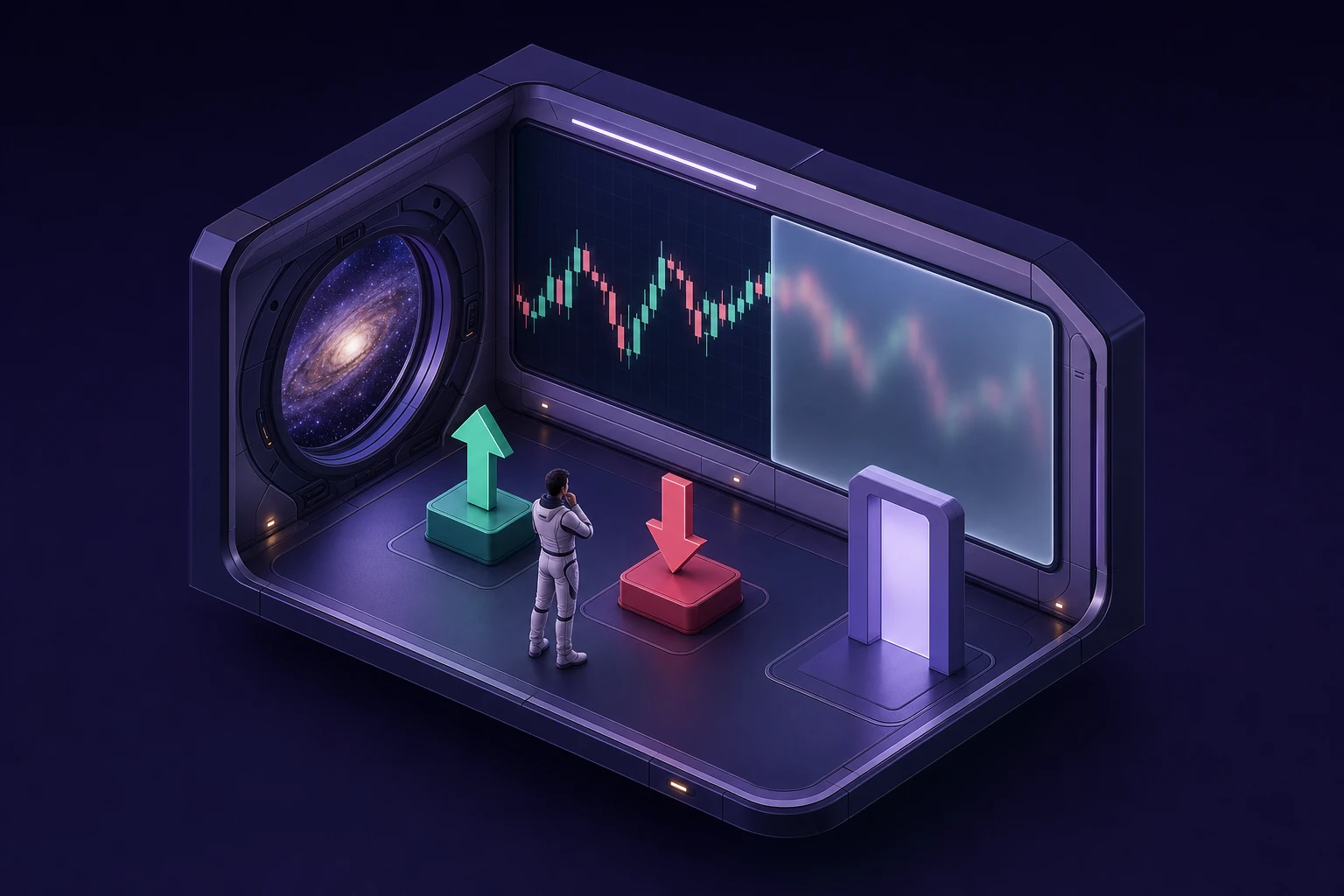
The price takes off without you. One green candle, then another. You hadn't planned this trade, but watching the move keep going becomes unbearable, so you get in. That's FOMO, "Fear Of Missing Out."
The term was born around social media. Trading gives it everything it needs: a market that never stops moving, and screenshots of gains circulating on moves you didn't take.
This guide describes a training method, not investment advice. Trading carries a high risk of capital loss.
Recognizing it
FOMO doesn't announce itself. You recognize it by what you do:
- You enter after the move, on the third or fourth candle in the same direction.
- You haven't written down a stop before clicking, or you set it afterward.
- Your size is bigger than usual, to "catch up" with what has already left.
- You switch timeframes until you find a chart that justifies the entry.
- You enter on a news item or a message, before looking at the chart.
- You feel urgency: "it's now or never."
The last sign is the most useful, because it lies. A market offers opportunities every week, and this one isn't the last.
What a late entry costs
FOMO also shows up in the numbers of the trade.
Take a price that goes from 100 to 110 in three candles. You buy at 110. Your idea, "the rise continues," becomes wrong if the price falls back below the last low, at 100. Your logical stop is therefore 10 points below your entry. Someone who bought at 101, at the start of the move, was risking 1 or 2 points for the same idea.
You're left with two choices, and neither is good:
- Keep the logical stop, at 10 points. To respect your risk per trade, your position has to be five to ten times smaller. And to aim for 2 R, your target has to be at 130, often beyond what the chart offers.
- Tighten the stop to 2 points to keep a normal size. It then falls inside the noise. Over five years of Bitcoin, a stop half a candle away was hit in 72% of cases within 24 hours, on randomly taken entries. The details are in the guide on the stop loss.
Either way, the relationship between what you risk and what you aim for has deteriorated before the trade even starts. The risk/reward ratio shows the calculation.
The study by the Autorité des marchés financiers (AMF), the French market regulator, on retail investors points the same way on a larger scale: the clients who placed the most orders lost the most. The guide why traders lose covers it in detail.
Where it comes from
Several mechanisms mix together. A missed gain leaves regret, and that regret pushes you to let nothing pass anymore. When everyone seems to be buying, not following feels risky. And the last few candles take up more room in your head than the rest of the chart.
These mechanisms affect everyone. What keeps them at a distance is what you decided before opening the chart.
A method to hold it back
- Write down your entry criteria before the session: the setup, the level, the trigger candle. No criteria met, no trade.
- Decide where you enter before the price gets there. An alert on a level replaces staring at the screen.
- Measure the stop before you click. If it's too far for a sound ratio, the trade has left without you, and you let it go.
- Keep the same size on every trade, calculated from the stop. The 1% rule gives the calculation.
- Wait for a pullback, or pass. If the price comes back toward a level, you have a plan. If it doesn't, you've lost nothing.
- Also log the trades you didn't take in your journal, with how they would have turned out. You'll see that some would have lost, and the regret over the others will weigh less.
FOMO, revenge and tilt
FOMO pushes you to enter so you don't miss a gain. Revenge trading pushes you to enter to erase a loss. Tilt sets in when emotion has made several decisions in a row. All three end up in the same place: a trade without a plan. And they chain together: a late entry hits its stop, and the urge to win it back arrives right away.
Training yourself to stay out
In TradaZen, the "Trader biases" unit teaches you to spot revenge, the fear of missing out and unplanned entries before they cost you. One of the questions: "Entering because it's already rising hard, without a plan, is:" The expected answer is "Fear of missing out."
In Training, "I stay out" is a full answer, just like Long and Short. When you choose it, the app tells you: "Staying out is a decision. Look at what you avoided, or missed." Seeing, on a simulated balance, what a missed move really costs is a good exercise against FOMO. To learn more, read the page on trading exercises.
Frequently asked questions
What does FOMO mean in trading?
FOMO stands for "Fear Of Missing Out." In trading, it's the urge to jump into a move that has already started, without a plan, because you can't stand watching it go without you.
How do you stop FOMO in trading?
Decide before the session: your entry criteria, your levels, your size. Measure the stop before you click, and let the trade go if that stop is too far. Also log the trades you didn't take to see how they would have turned out.
What's the difference between FOMO and revenge trading?
FOMO makes you enter so you don't miss a gain. Revenge trading makes you enter to erase a recent loss. Both lead to the same place: a trade taken without a plan.
Should you enter when the price takes off without you?
Not without a plan. Measure where your logical stop would be and where your target is. If the ratio no longer holds, the trade is gone. Another one will come, on another chart or another day.
 Mehdi Azizi created TradaZen and published it on the App Store through the Devoria studio. The app's scenarios are real past charts, never made-up data.
TradaZen is a training tool: you play on past market data with a simulated balance. It is not a broker and not investment advice. Real trading carries a risk of capital loss.